
Systems & SOPs
7 min read
Why Your SOPs Are Not Working and How to Fix Them
Standard operating procedures (SOPs) usually stop working because they are written for the person who already understands the process. They need to work for the person who has to follow it. A useful SOP explains the goal, owner, tools, steps, standards, review process and what done looks like. When it misses those, your team comes back to you with questions.

Anna Rikka "Annikka" Aborro
Founder & CEO, TAP OBM · May 04, 2026

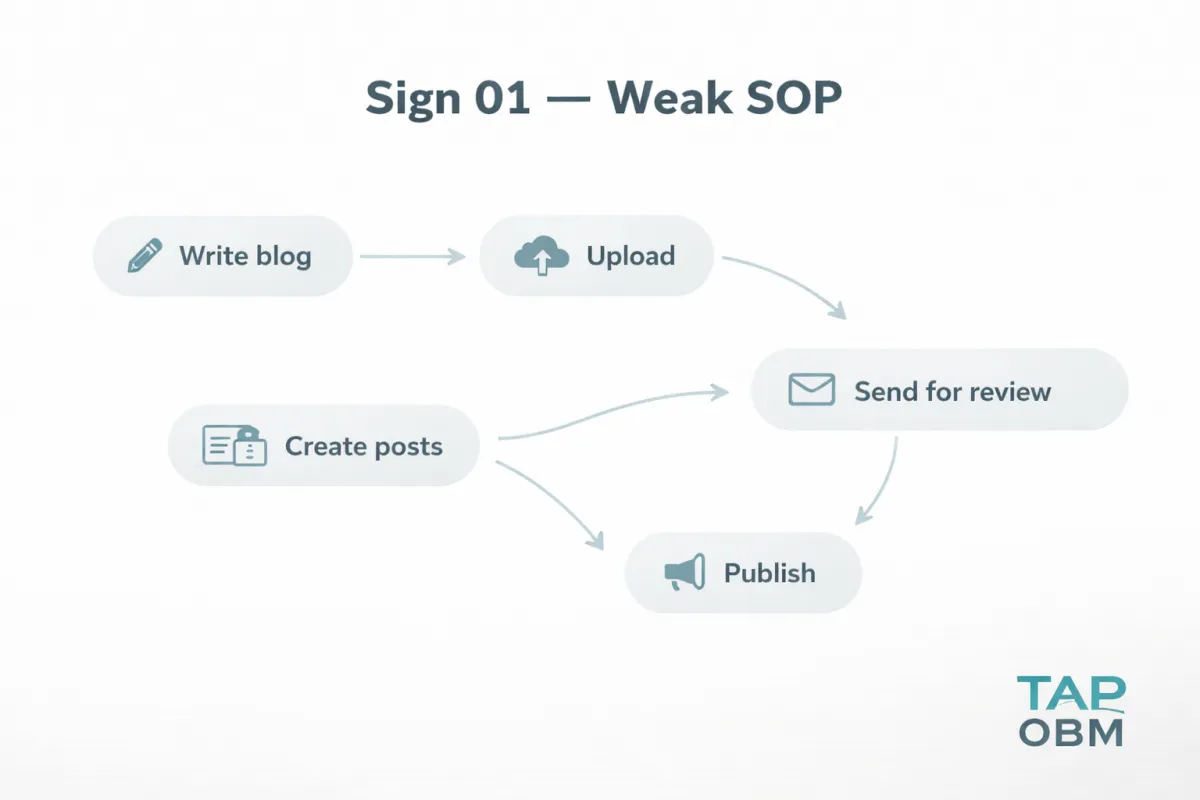
A lot of business owners think they have an SOP problem. They do not. Most of the time, they have a clarity problem. They will say, "We already have SOPs." Then when I open the document, I usually see the real issue. The SOP is outdated. The steps are missing. The screenshots are old. The person reading it still has to ask five more questions before they can actually do the work.
Why Are My SOPs Not Working?
Your SOPs are probably not working because they are written for the person who already understands the process, not for the person who has to follow it. A useful SOP should explain the goal, owner, tools, steps, standards, review process, and what done looks like. If the SOP does not answer those things clearly, your team will still come back to you.
An SOP Is Not Useful Just Because It Exists
A document sitting in Google Drive does not mean your business has structure. A checklist in ClickUp does not mean the work is clear. An SOP only matters if it can be followed by the person doing the work. Not by you. Not by the person who created it. By the next person who needs to step in and keep the work moving.
"If a fifth grader looked at your SOP, they should be able to understand the next step."
Why Your Team Keeps Asking the Same Questions
Your team is probably not ignoring the SOP because they do not care. They are ignoring it because the SOP does not actually help them do the work. A team member opens the document, gets confused, and decides it is faster to ask you. Then you answer. Then they ask again next week. At that point, the SOP is not reducing founder dependency. It is just pretending to.
Good SOPs Are Built for Continuity
SOPs are not created to make the business look organized. They are created so the business does not stop when one person is unavailable. Someone gets sick. Someone goes on leave. Someone resigns. The process should not fall apart because one person is gone. That is the point of an SOP. It gives the business memory.
The Fifth Grader Test for SOPs
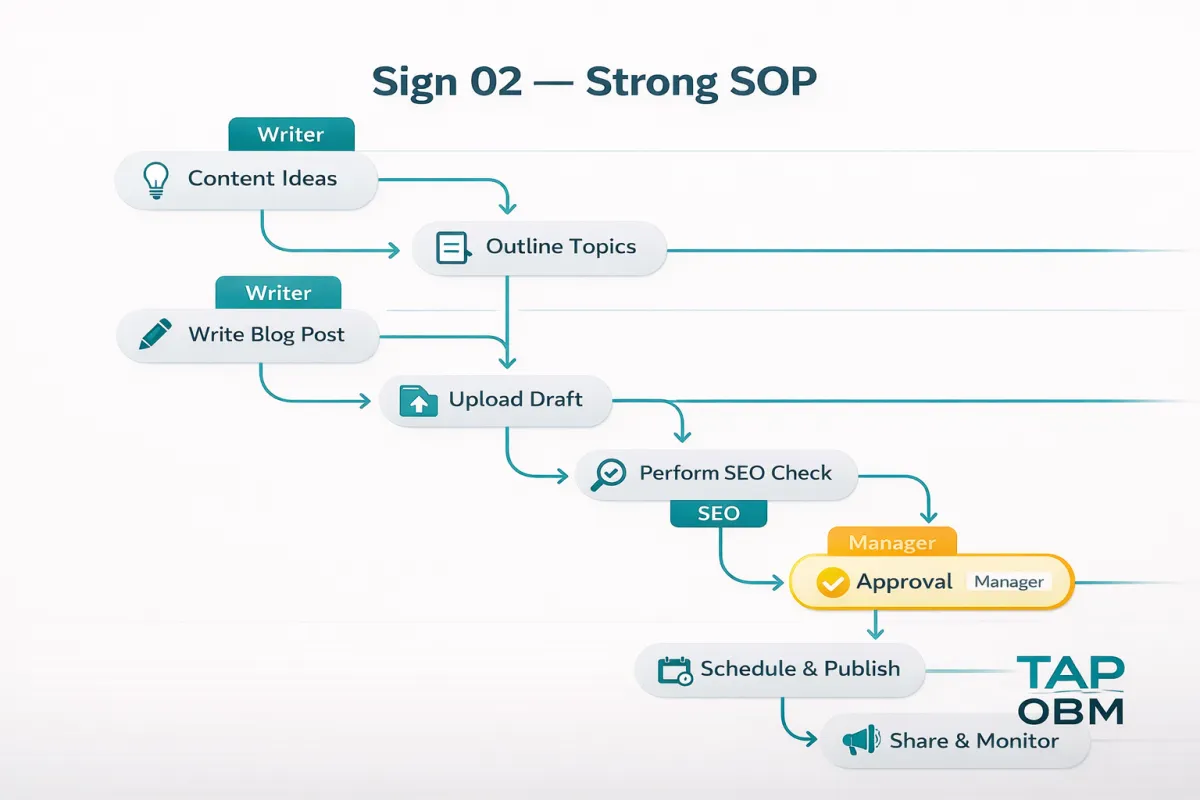
When I review an SOP, I ask one simple question: Can someone follow this without needing a live explanation? If the answer is no, the SOP is not finished. A strong SOP should answer: What is the goal? When should this be used? Who owns the work? What tools are needed? Where are the files? What are the exact steps? What does done look like? Who checks the work? What should the person do if something is missing?
SOPs Should Not Depend on Memory
One of the biggest mistakes I see is when business owners build SOPs around assumptions. They assume the team knows where the file is. They assume the team knows the naming convention. They assume the team knows what "send for review" means. Assumptions are where operations break. Your SOP should reduce mental load, not add more.
How Better SOPs Reduce Founder Dependency
A strong SOP reduces back and forth, protects quality, makes onboarding faster, and helps the team make better decisions without waiting for the owner. That is why SOPs are not just documents. They are part of your operational infrastructure.
If your backend feels messy and your team keeps coming back to you for the same things, your SOPs might need more than a quick update. They might need a full operational audit. TAP OBM helps founder led online businesses build the systems, team accountability, and operational structure needed to reduce founder dependency.
Frequently asked questions
What is the fifth grader test for SOPs?
The fifth grader test asks one question: can someone follow this SOP without a live explanation? If a fifth grader looked at it, they should understand the next step. If not, the SOP is not finished. A strong SOP covers the goal, when to use it, who owns the work, the tools, where the files are, the exact steps, what done looks like, who checks the work and what to do if something is missing.
What is the biggest mistake business owners make when writing SOPs?
Building SOPs around assumptions. Owners assume the team knows where the file is, knows the naming convention or knows what "send for review" means. Assumptions are where operations break. Write every SOP for the next person who has to step in and keep the work moving. A good SOP reduces their mental load and never adds to it.
Why do SOPs matter if my team already knows the work?
SOPs protect continuity. Someone gets sick, goes on leave or resigns, and the process should not fall apart because one person is gone. An SOP gives the business memory. Strong SOPs also cut down the back and forth, protect quality, make onboarding faster and help the team make better decisions without waiting for the owner.
Written by
Anna Rikka "Annikka" Aborro
Founder of TAP OBM. With 18+ years of operations leadership experience across 23+ countries and teams of 100+, Annikka helps established online businesses build the systems, team accountability, and operational structure they need to scale without founder dependency.
Ready to Stop Running
Your Operations Yourself?
Book a discovery call. We will talk about your business and whether TAP
OBM is the right fit before anything else.