
Systems & SOPs
7 min read
Why ClickUp Will Not Fix Unclear Ownership
ClickUp will not fix unclear ownership because a project management tool only holds the work. Someone still has to own it. Ownership has to be designed: who owns each outcome, what done looks like, how updates happen and what gets escalated. Without that, ClickUp only organizes the confusion. Tasks sit untouched and deadlines move quietly.

Anna Rikka "Annikka" Aborro
Founder & CEO, TAP OBM · June 19, 2026

I love a clean project board. ClickUp, Asana, Trello, Notion, Monday — I love when the business has somewhere to put the work. But a project management tool is not the same thing as an operating system. And this is where a lot of business owners get it wrong. They think the tool will fix the mess. It will not. If ownership is unclear, ClickUp will only organize the confusion.
Why Is ClickUp Not Fixing My Business Operations?
ClickUp may not be fixing your business operations because the problem is not the tool. The problem may be unclear ownership, weak follow through, vague task standards, or no operating rhythm behind the project board. ClickUp can hold the work, but it cannot own the work.
A Project Board Is Not an Operating System
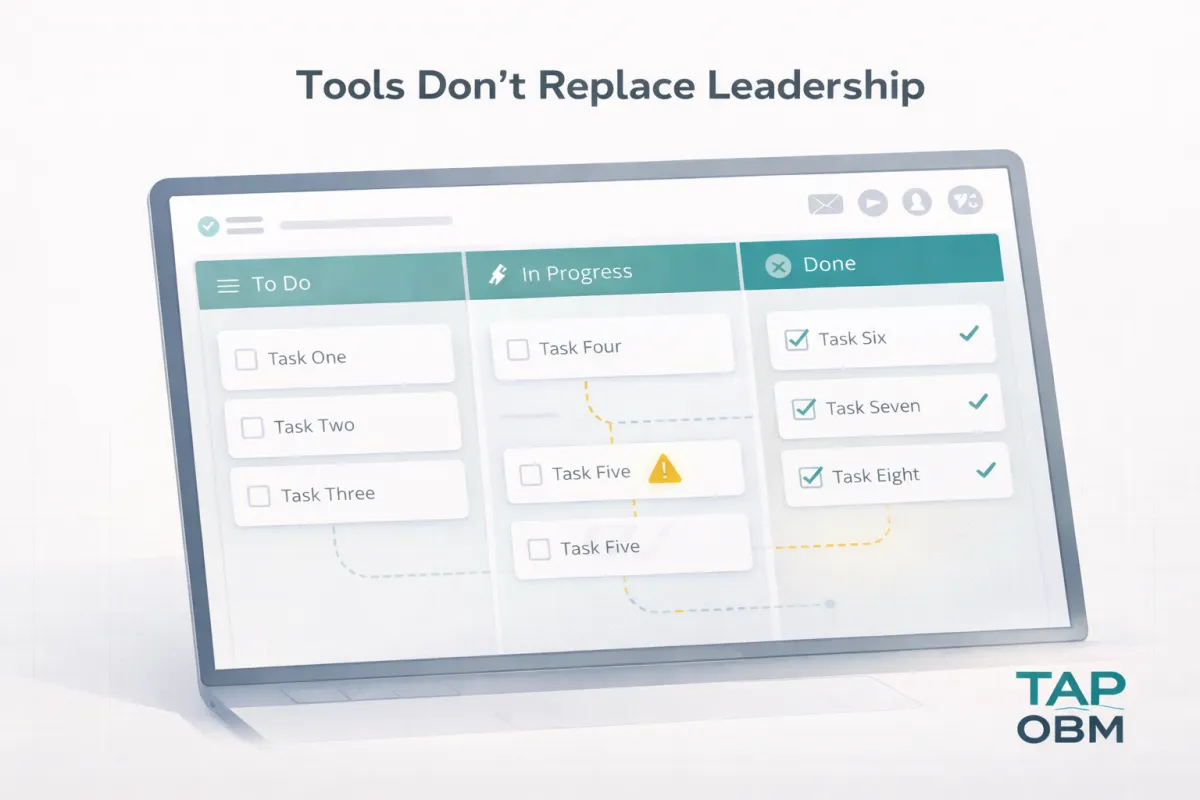
A project board can show tasks, deadlines, comments, statuses, and assignees. But a project board cannot make someone own the outcome. That part has to be designed. If the team does not understand who owns what, the tool will not magically fix it. You will still see the same problems — tasks sitting untouched, deadlines moving quietly, work marked complete when it is not really complete.
The Problem Is Usually Not the Tool
When a business feels messy, the owner often thinks "We need a better system." So they move from Trello to ClickUp. Then from ClickUp to Notion. Then from Notion to Asana. Then they rebuild everything again. But the same issues follow them. Why? Because the problem was never the tool. The problem was unclear ownership, unclear standards, and unclear follow through.
Assigned Does Not Always Mean Owned
This is one of the biggest mistakes I see. A task is assigned to someone, so the owner thinks the work is owned. But assigned and owned are not always the same thing. Assigned means the task is under someone's name. Owned means that person understands the outcome, moves the work forward, communicates blockers, and closes the loop.
ClickUp Cannot Replace Leadership
How to Build Ownership Inside ClickUp
The fix is not always moving to a new tool. The fix is usually rebuilding the operating rhythm behind the tool. Clean up task naming. Define ownership. Set clear statuses. Create rules for updates. Clarify what gets escalated. Build weekly review habits. Create accountability around deadlines. Make sure every task has a clear outcome.
"Changing tools is easy. Building operational clarity is the real work."
Questions to Ask Before Changing Tools Again
Open your project board and ask: Can I tell what actually matters this week? Can I see what is stuck? Can I see who owns each outcome? Can the team move without asking me? Can someone new understand how work flows? If the answer is no, the tool is not the problem. The structure behind the tool is.
TAP OBM helps founder led online businesses build the systems, team accountability, and operational structure needed to reduce founder dependency.
Frequently asked questions
How do I set up ClickUp so people actually own their tasks?
Rebuild the operating rhythm behind the tool before you move to a new one. Clean up task naming. Define who owns what. Set clear statuses and rules for updates. Clarify what gets escalated. Build a weekly review habit, create accountability around deadlines, and make sure every task has a clear outcome. An owner moves the work forward, flags blockers and closes the loop.
What should I check before switching project management tools?
Open your current board and ask five questions. Can I tell what actually matters this week? Can I see what is stuck? Can I see who owns each outcome? Can the team move without asking me? Can someone new understand how work flows? If the answers are no, a new tool will carry the same problems over. Fix the structure behind the tool first.
Why does my team keep missing deadlines in ClickUp?
Deadlines slip when a task is assigned to someone and nobody truly owns it. Assigned means the task sits under a person's name. Owned means that person understands the outcome, moves the work forward, communicates blockers and closes the loop. Missed deadlines usually point to unclear ownership, weak follow through, vague task standards or no operating rhythm behind the board.
Written by
Anna Rikka "Annikka" Aborro
Founder of TAP OBM. With 18+ years of operations leadership experience across 23+ countries and teams of 100+, Annikka helps established online businesses build the systems, team accountability, and operational structure they need to scale without founder dependency.
Ready to Stop Running
Your Operations Yourself?
Book a discovery call. We will talk about your business and whether TAP
OBM is the right fit before anything else.