
Team Accountability
8 min read
The C.L.E.A.R. Accountability Framework: How to Have Hard Conversations With Your Team Without Making It Personal
The C.L.E.A.R. Accountability Framework is a five-step method for performance conversations with team members, built by Anna Rikka Aborro of TAP OBM after 18 years of project management. The steps: Call out the specific issue, Link it to the impact, Explore what is getting in the way, Agree on the next standard, and Review the follow through.

Anna Rikka "Annikka" Aborro
Founder & CEO, TAP OBM · May 18, 2026
If you keep "being nice" to a team member who is not meeting expectations, you might actually be creating a bigger problem. The business owner avoids the conversation because they do not want to be mean. They soften the feedback. They redo the work themselves. But nothing changes. Then the frustration builds. The team member feels confused because nobody clearly told them what needed to change. That is not kindness. That is unclear leadership.
About Me
I'm Anna Rikka Aborro, founder of TAP OBM and TAP Virtual Solutions. After 18 years of project management, I built a framework for having these conversations without making it personal, avoiding the issue, or waiting until you are already mad. It is called The C.L.E.A.R. Accountability Framework.
What C.L.E.A.R. Stands For
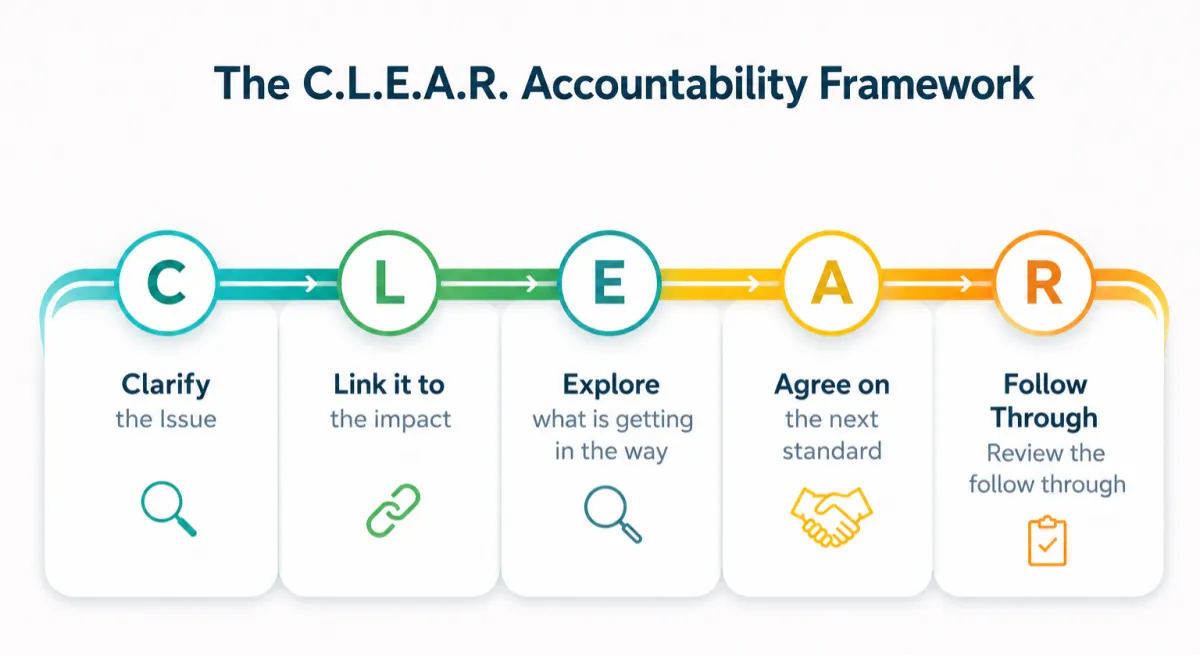
C
Call Out the Specific Issue
Talk about what happened. Not who they are as a person. When you have already reminded someone several times, it is easy to say "you are unreliable" or "you are careless." The moment you say it that way, most people defend themselves. Stay on the behavior.
Instead of "you are unreliable," say: "The last three client reports were submitted late, and two of them had errors that needed correction."
Instead of "you do not communicate properly," say: "On Monday and Wednesday, I had to follow up twice before I got an update on the project."
When you are specific, the conversation becomes easier to handle.
L
Link It to the Impact
Explain why the issue matters. Sometimes they know they were late. But they do not always understand what that creates for the business.
"When reports go out late, the client starts to lose confidence in our delivery."
"When there are errors, someone else has to stop what they are doing and fix the work."
"When I do not get updates, I cannot manage the client properly or make decisions on time."
A lot of business owners assume their team already understands this. They do not. Explaining the impact is not overexplaining. It is leadership.
E
Explore What Is Getting in the Way
Ask what is going on before you jump to conclusions. Not every performance issue means the person does not care. Sometimes the person is the problem. But sometimes the process is the problem.
After you explain the issue and the impact, ask: "I want to understand what is getting in the way." Then ask simple follow-up questions. Is the process unclear? Is the workload too much right now? Do you need training on something?
If it is a people issue, address the people issue. If it is a system issue, fix the system. A lot of the time, it is both.
"A lot of business owners think they have a people problem. Sometimes, it is an operations problem showing up through people."
A
Agree on the Next Standard
Do not end the conversation with "just do better next time." That means nothing. Say it clearly.
"Moving forward, the report needs to be submitted every Thursday by 3 PM. Before sending it, complete the quality check. Once it is done, update the ClickUp task so I know it is ready for review."
Then ask: "Can you commit to that?" That question matters. Because now they are not just listening to instructions. They are agreeing to the expectation.
R
Review the Follow Through
Set a follow-up. Do not have the conversation once and then hope everything changes.
"Let us review this again in two weeks." "I will check the next two reports, then we will talk again."
Accountability is not just about catching someone doing something wrong. It is about giving them a clear chance to correct it.
Why Clarity Is Kindness
Avoiding the conversation does not make you kind. Sometimes it just makes the whole thing messier. While you are trying not to hurt someone's feelings, the business is paying for it. The client experience suffers. The team gets delayed. Your energy gets drained.
You can be respectful and direct at the same time. Good team members usually appreciate clarity. Clear feedback gives people something to work with. Silence does not.
Did I set the expectation clearly? Did they know what "done" actually looks like? Did they know when and where to give updates? That does not remove accountability from the team member. It just makes you a better leader. Because sometimes the issue is really performance. But sometimes the role is unclear, the deadline was not properly set, or there is no clear place for updates.
If you have been avoiding a conversation with a team member, start there. Use C.L.E.A.R. Call out the specific issue. Link it to the impact. Explore what is getting in the way. Agree on the next standard. Review the follow through. No silent resentment. No fixing the work quietly. Keep it clear. Keep it fair.
Frequently asked questions
How do I give feedback to an underperforming team member without making it personal?
Talk about what happened, and leave their character out of it. Labels like "you are unreliable" make people defend themselves. Name the specific behavior instead: "The last three client reports were submitted late, and two of them had errors that needed correction." Then explain why it matters to the client and the team. Specific feedback is easier for both of you to handle.
Is avoiding a hard conversation with my team the kinder choice?
Avoiding the conversation usually makes things messier. While you protect someone's feelings, the business pays for it: the client experience suffers, the team gets delayed and your energy drains. When you soften feedback and redo the work yourself, the team member stays confused about what needs to change. You can be respectful and direct at the same time. Clarity is kindness.
How do I make sure a team member actually improves after a performance conversation?
End with a clear standard and a follow-up date. Skip "just do better next time," because it means nothing. Say exactly what done looks like, for example: the report goes out every Thursday by 3 PM, after a quality check, with the ClickUp task updated. Ask, "Can you commit to that?" Then set a review, like checking the next two reports or meeting again in two weeks.
Written by
Anna Rikka "Annikka" Aborro
Founder of TAP OBM. With 18+ years of operations leadership experience across 23+ countries and teams of 100+, Annikka helps established online businesses build the systems, team accountability, and operational structure they need to scale without founder dependency.
Ready to Stop Running
Your Operations Yourself?
Book a discovery call. We will talk about your business and whether TAP
OBM is the right fit before anything else.